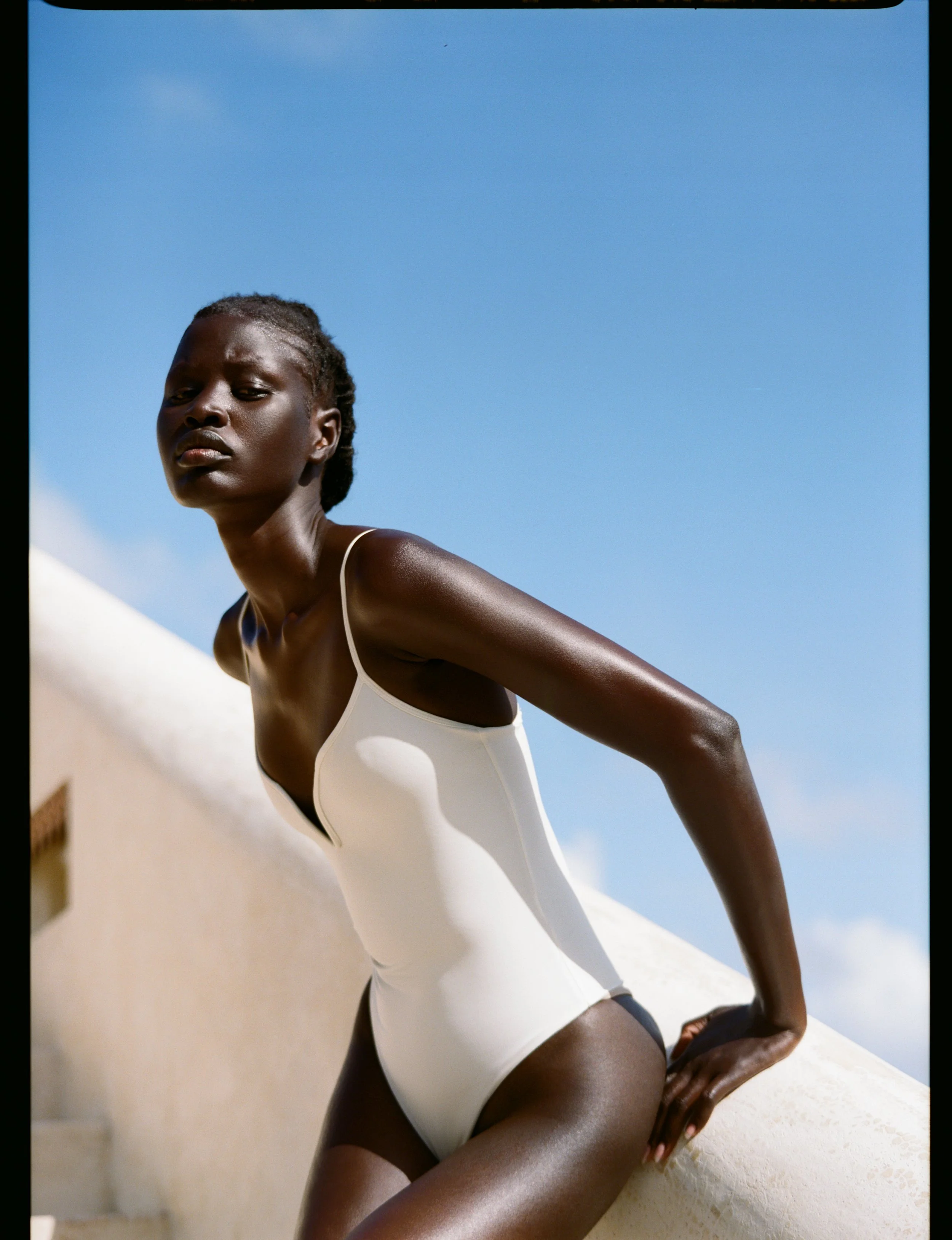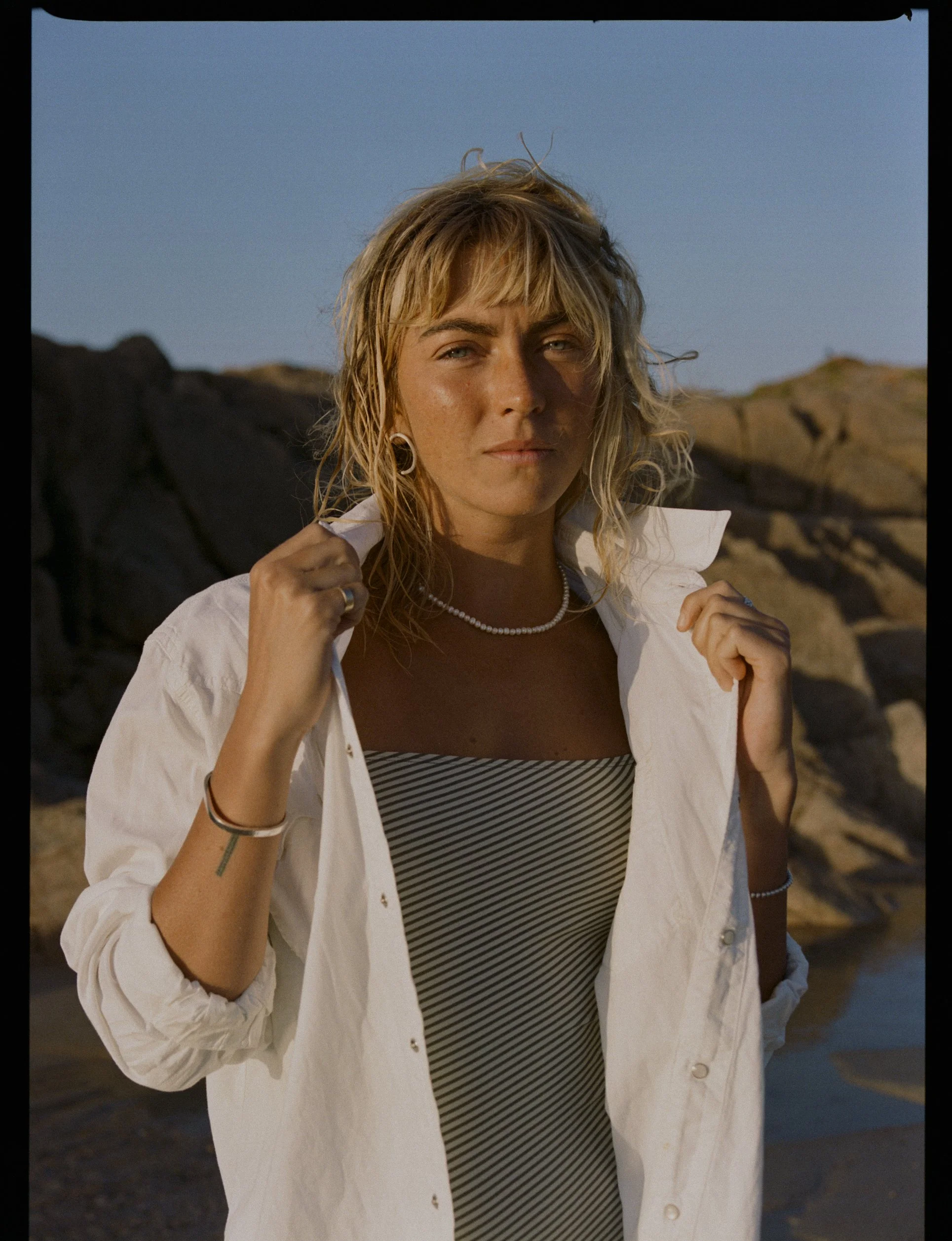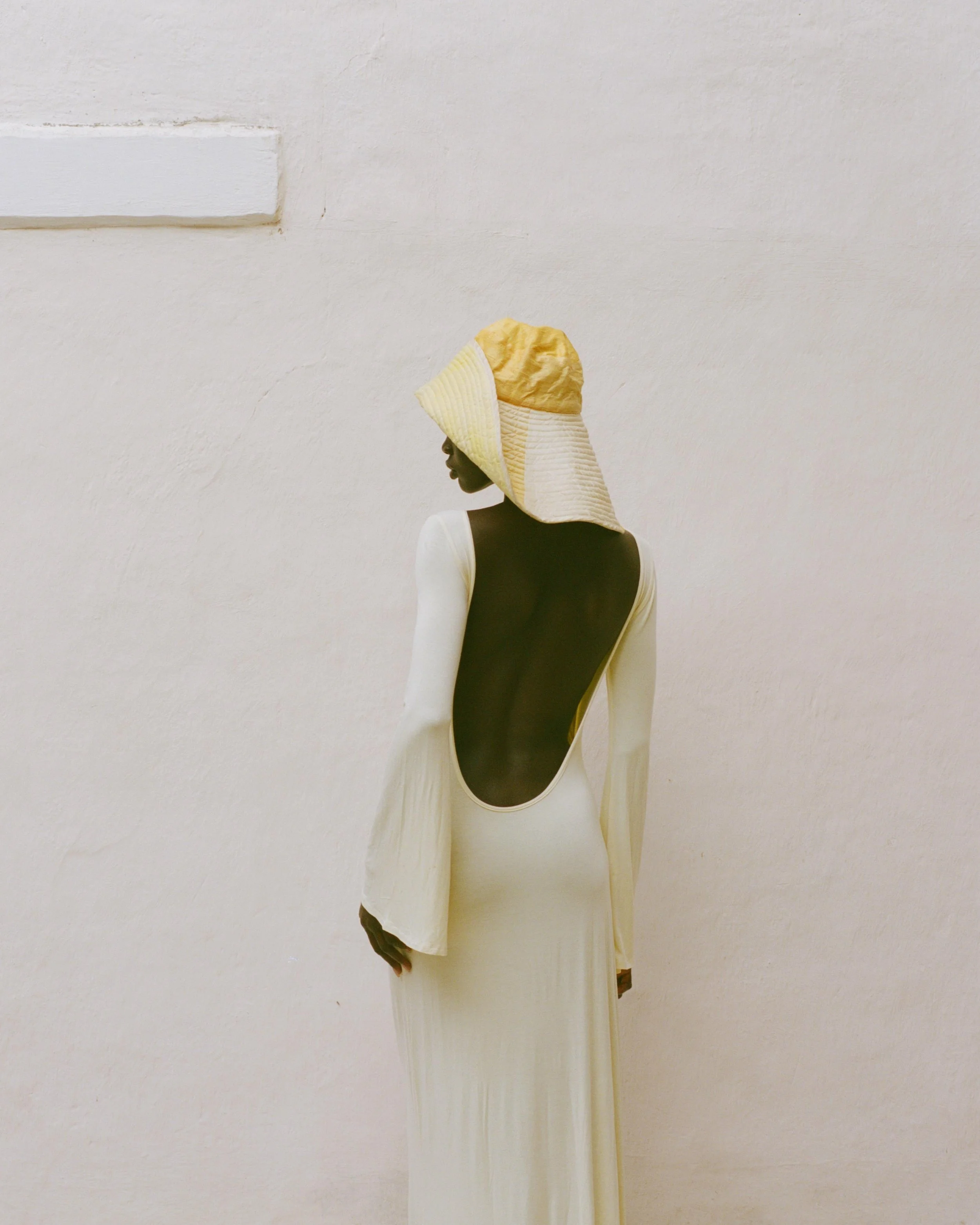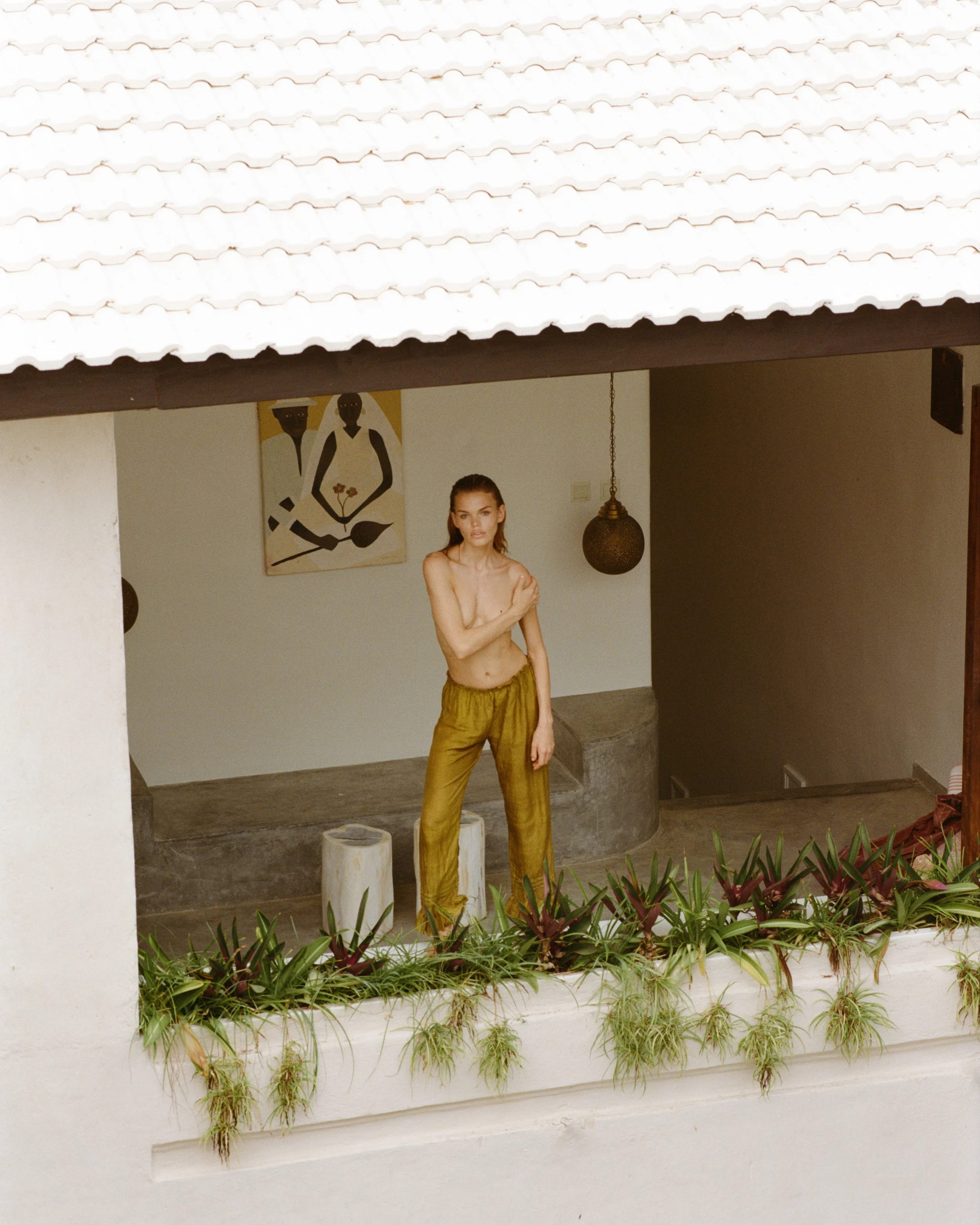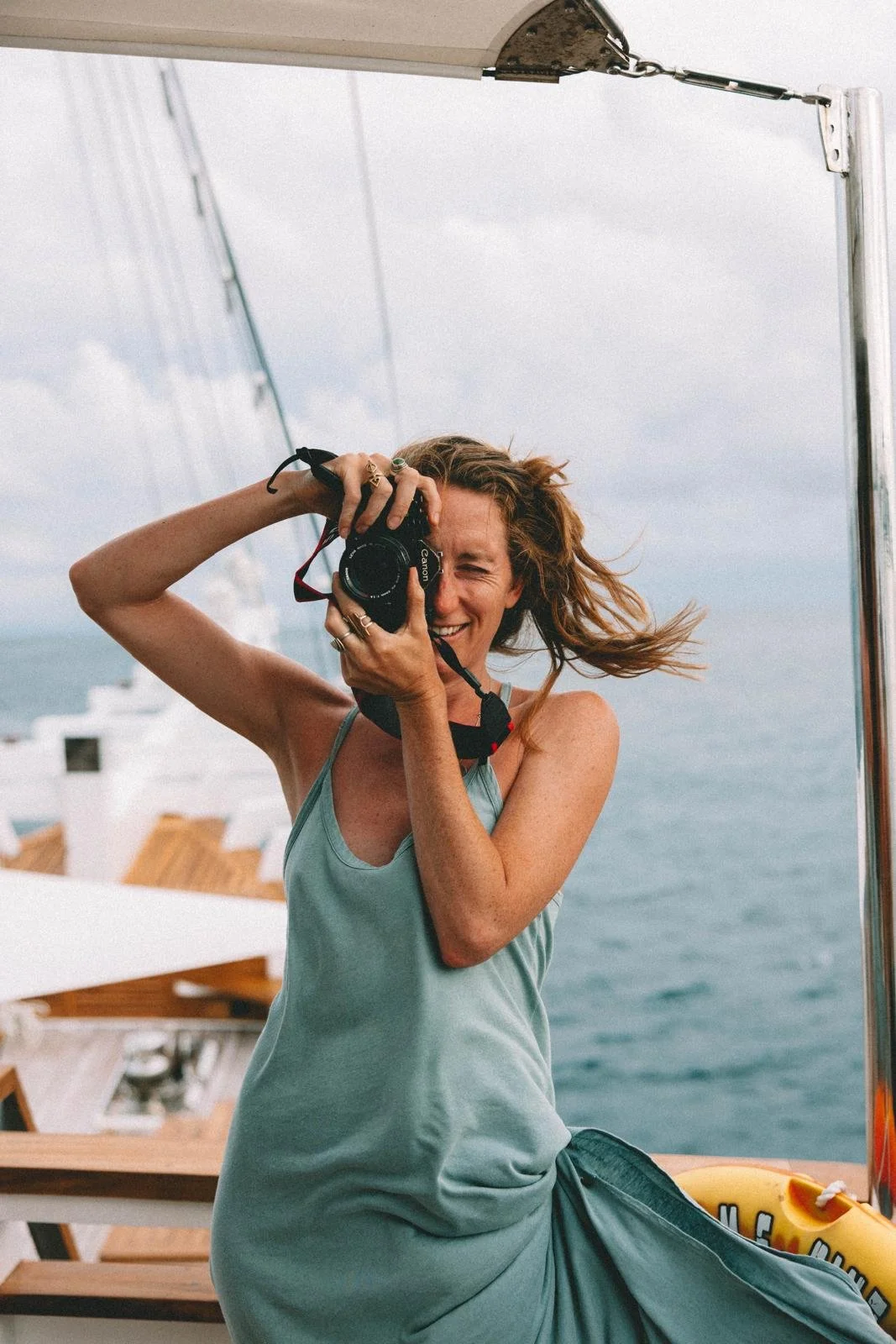
Please introduce and tell us a little about yourself.
I'm Jade Capaldi, from an independent island called Jersey, located in the Channel between France and England. It's 9 by 5 miles, so I won't be offended if you've never heard of it. And if you have, chances are myself or one of my friends knows the person you met from there. I feel very lucky to have grown up there, spending most of my time on the beach or in nature. I feel most at home near the ocean. I've found many island homes during my travels, and I've realized over time that travel isn't a break from my work; it's become part of my process. I find locations and get overexcited, imagining all the possibilities. I'm a bit of a fish out of water in the city, though when I have a local guide, I do love exploring.
Interesting fact: one side of my family moved from Italy to Scotland, where they had an ice cream shop, Capaldi's Ice Cream. We have the recipe, but it's impossible to recreate because of the number of E numbers in it. Shame. Apparently, it was amazing.
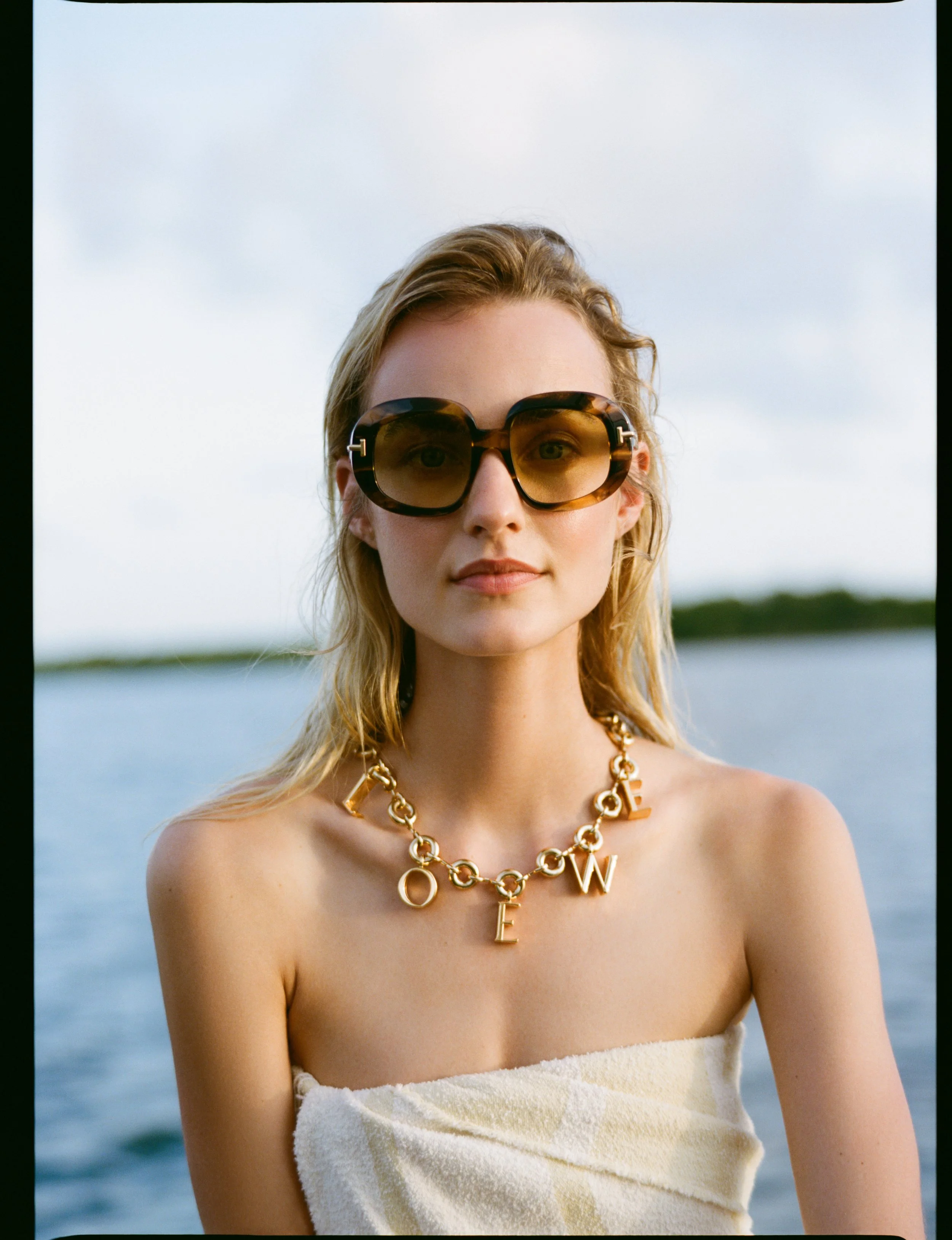
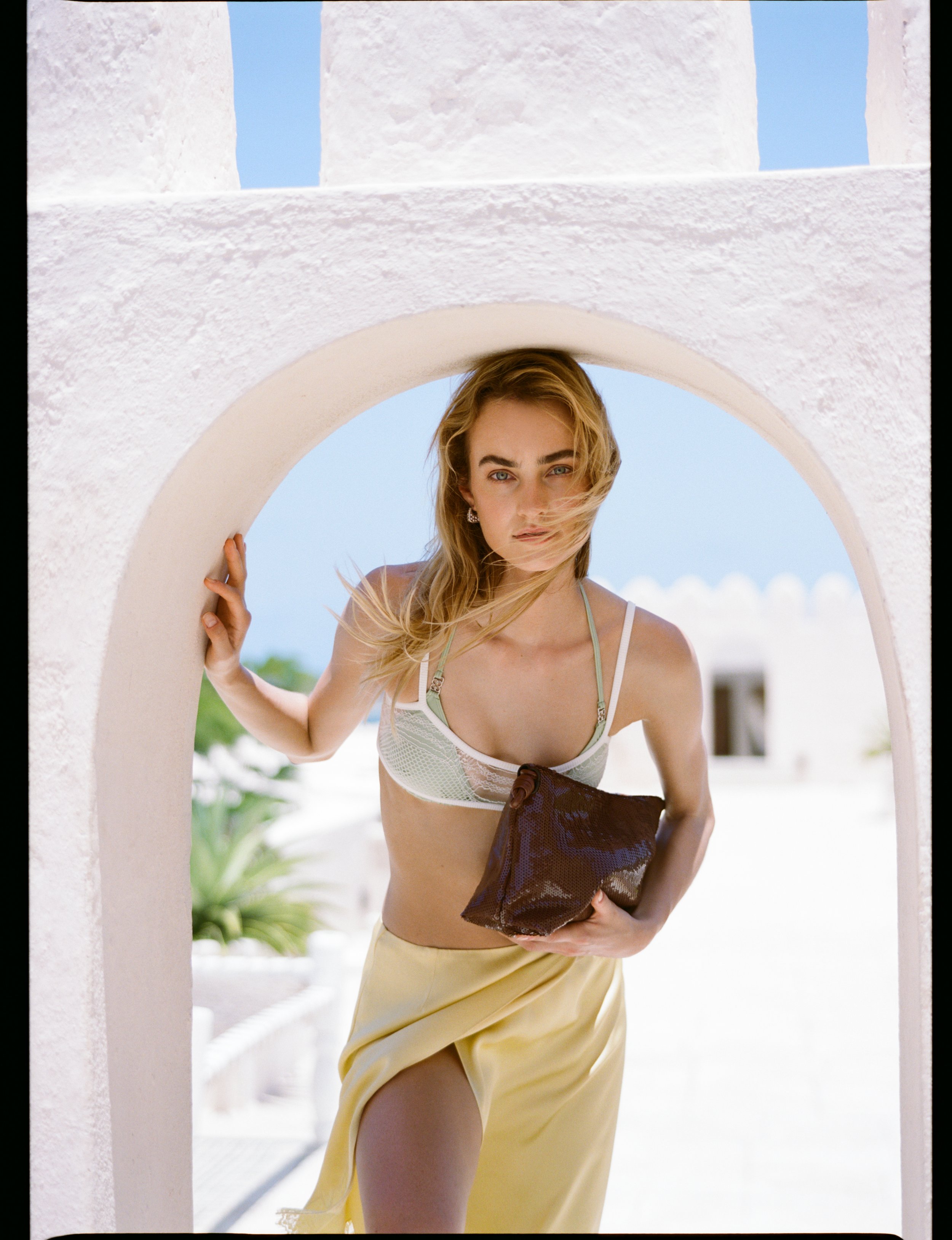
You describe yourself as a film photographer. When did you get your first film camera, and what continues to draw you to film photography?
We have an old ’80s suitcase, completely full of old photos, and I always loved getting it out and discovering the stories behind each one. That curiosity really shaped me. I started, like most people, on disposable cameras, taking them everywhere and documenting everything, even at 10 years old. Luckily, back then it only cost a couple of pounds to develop them at good old Boots.
By 14, I’d taken to eBay and bought my first analogue Canon, and off I went. I had a brief period of shooting digital, learning as much as I could, but it never quite felt right for me. For me, the art isn’t just in taking the image; it’s in the tactile nature of the entire process. Choosing the film, sometimes even selecting expired rolls and not quite knowing how they’ll turn out, is part of the magic. More recently, working closely with labs to develop my own style, understanding how I want my images to look, and having them hand-printed has been really rewarding.
A dream of mine is to have my own darkroom in a little hut by the ocean… still working on that one.
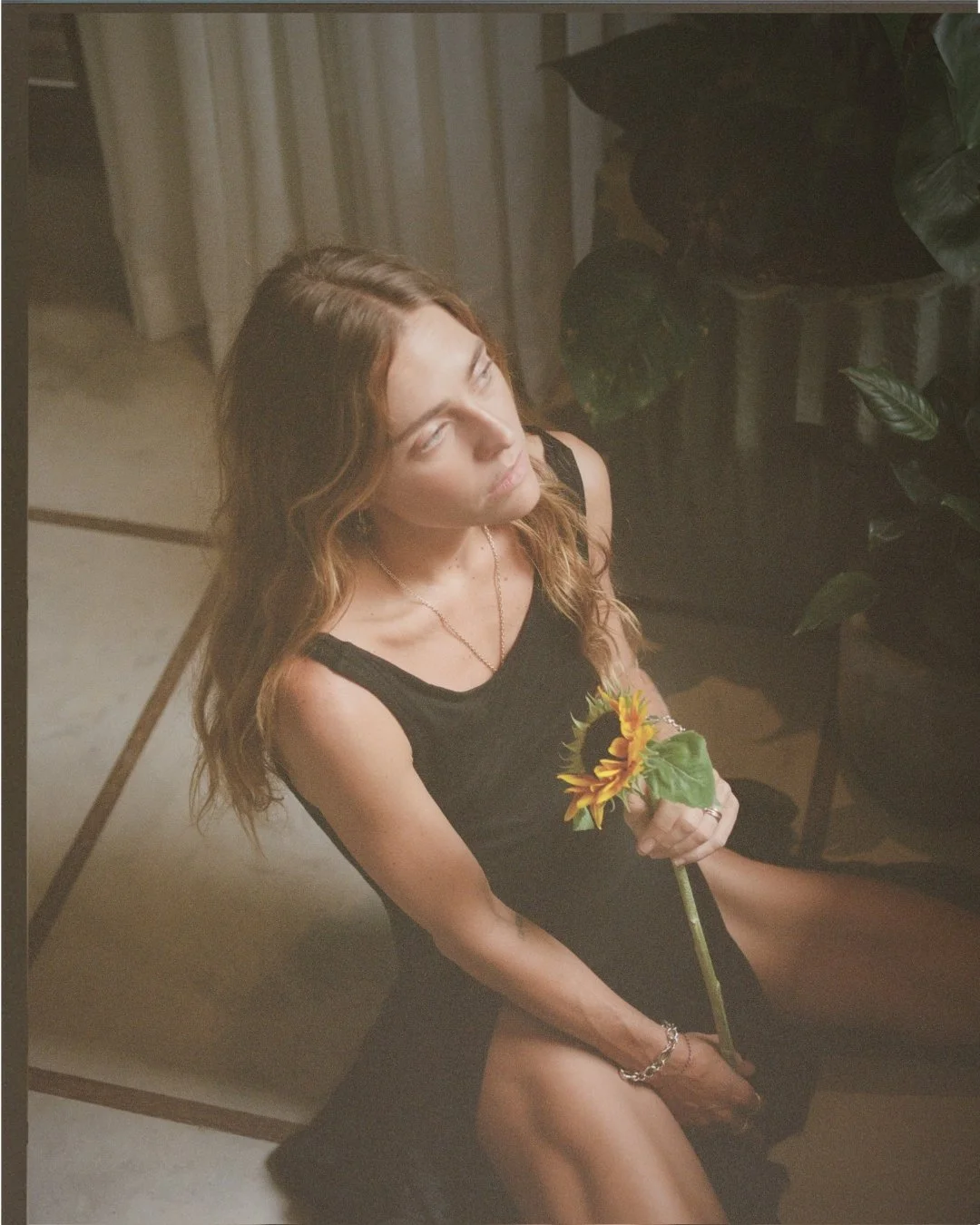
What subjects did you first photograph, and who or what were your early influences?
After finishing my architecture degree, I felt a strong pull to move to Bali, driven by eco-architecture, my camera, and a desire to create a jewellery brand. Through a stroke of good fortune, and social media, I came across a jewellery brand looking for an intern, so I booked a one-way ticket to Bali.
It’s hard to describe the feeling, and I’m sure many people have experienced it themselves, but there’s an indescribable mix of excitement and trepidation that comes with stepping into the unknown. The travel bug bit me hard. That was the moment when travel and photography stopped being separate passions and became inseparable.
I found a second island home in Lombok, just a short journey from Bali, where I spent my time photographing local life, nature, landscapes, and the ocean. My earliest influences came from painters. My early landscapes reflected my love of mono-printing, the work of Gerhard Richter, cinema, and the irresistible pull of discovering new places.
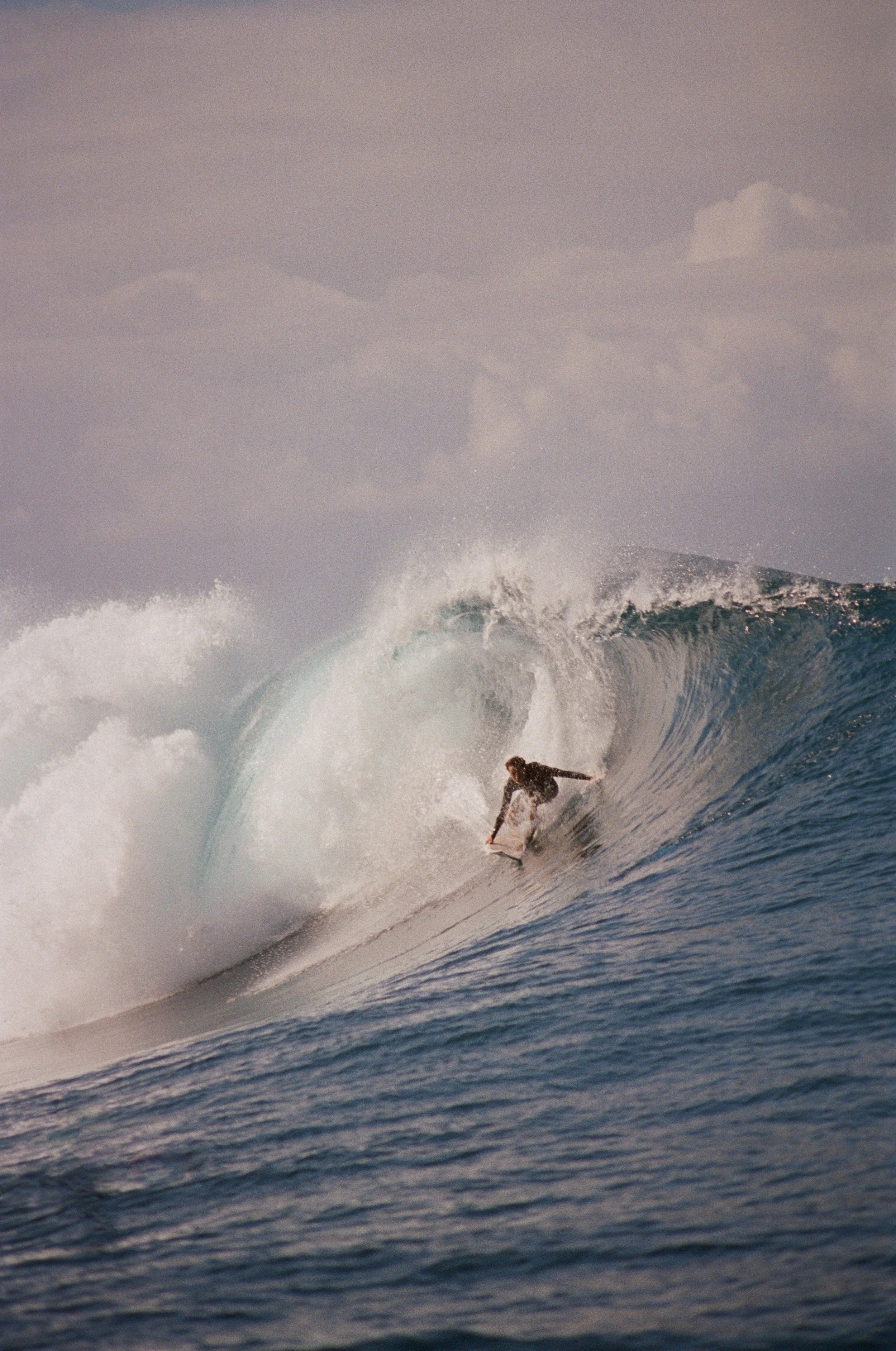
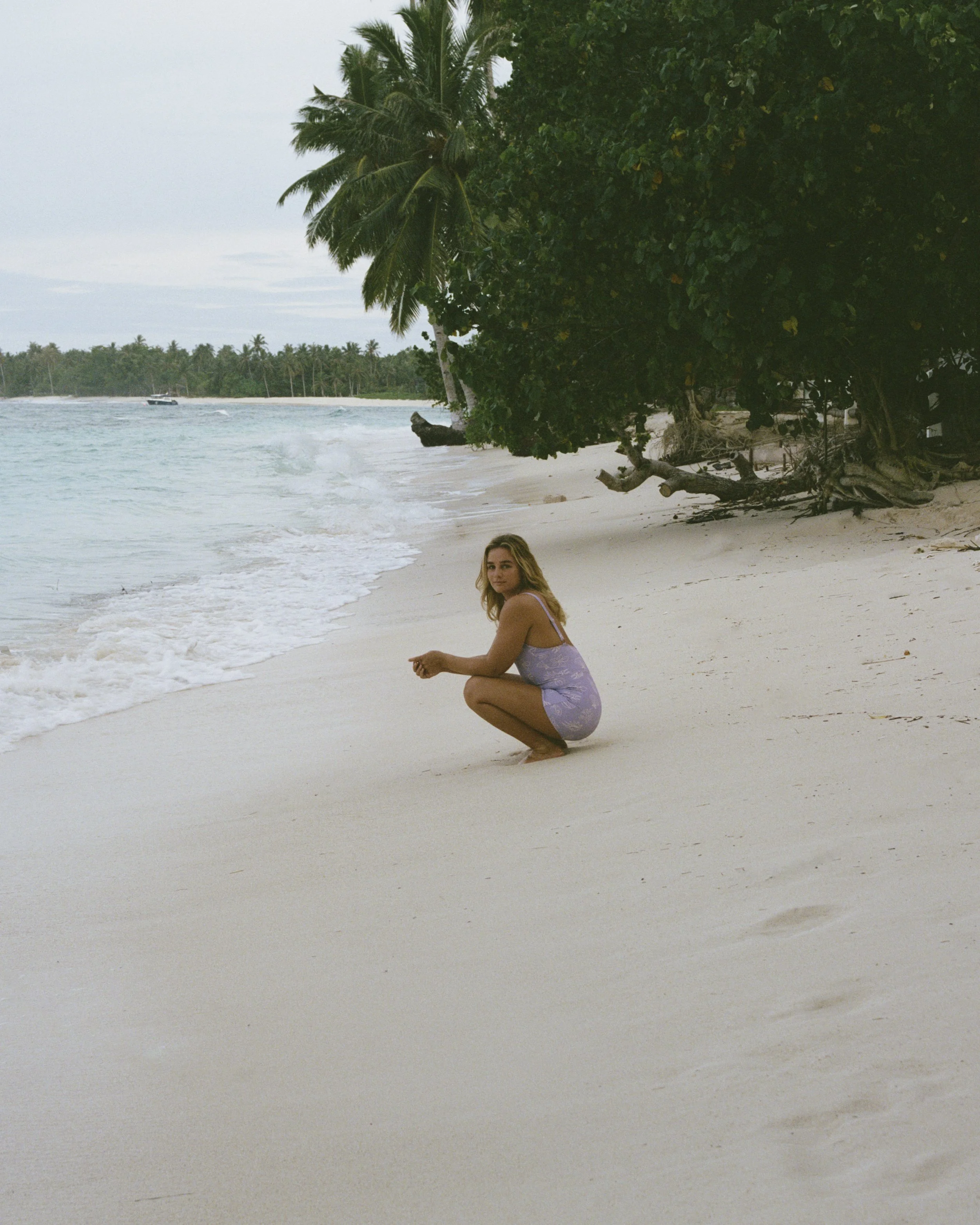
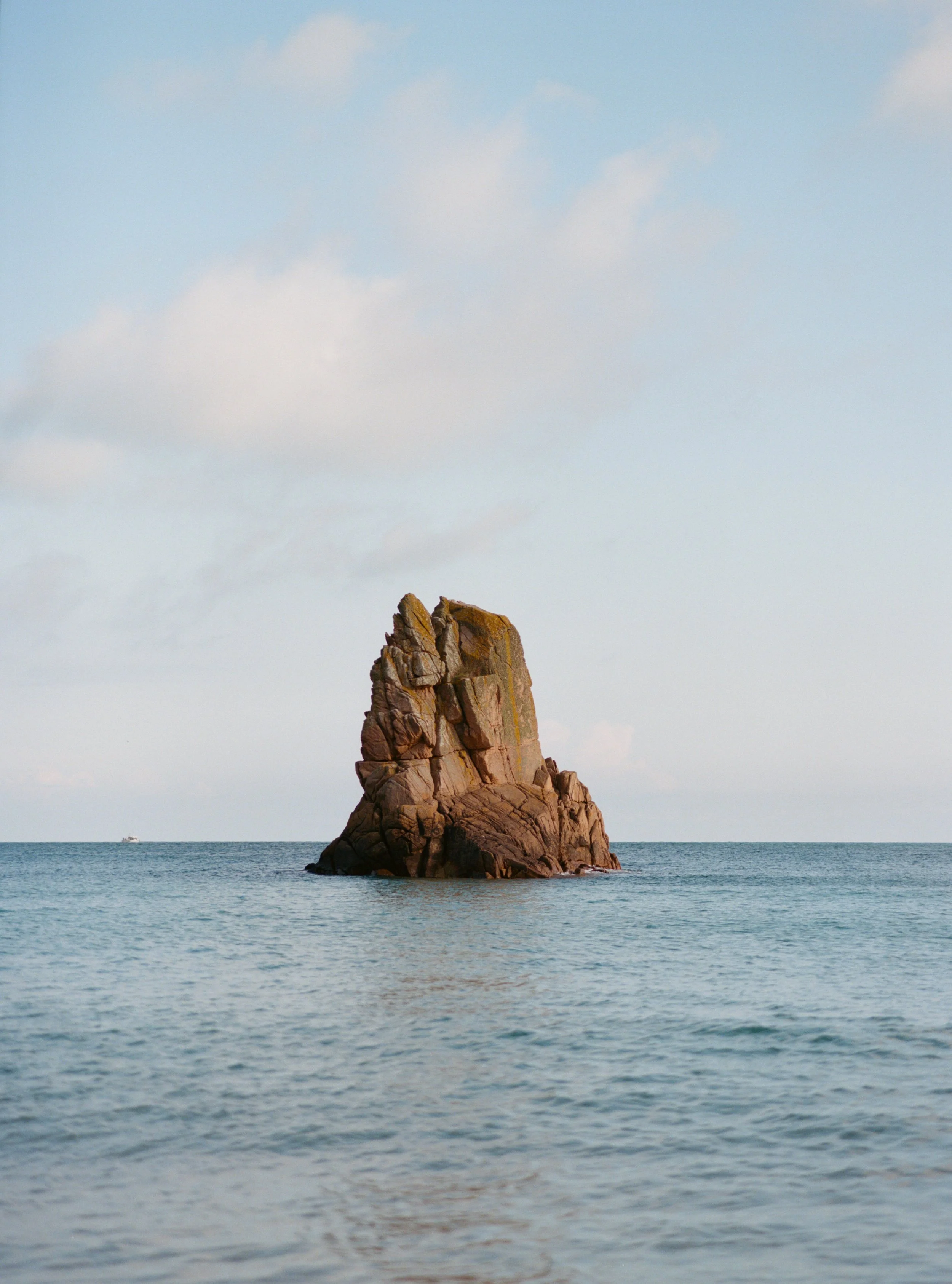
Your practice now extends beyond still photography into Super 8 film. How did moving image enter your work, and what did Super 8 allow you to express that still photography could not?
Part of me has always wanted to be involved in film. My dad was always behind his VHS camera, and that was such a big part of what I grew up seeing. It’s something I look back on with a lot of fondness. Capturing authentic moments and preserving memories has always felt meaningful to me. I wanted to act and direct, and shooting on 8mm scratches that itch. Creating worlds and telling stories, then being able to shoot them on the go without a big team, is a beautiful way to work. You can bring what’s in your mind to life with nothing more than a roll of film, imagination and your camera. The grain has completely won me over, and I struggle to move away from it. So aligning myself with projects and people who are looking for that aesthetic has become a big part of what I currently do.
Was there a specific trip or moment when you realized that photography was something you wanted to pursue professionally?
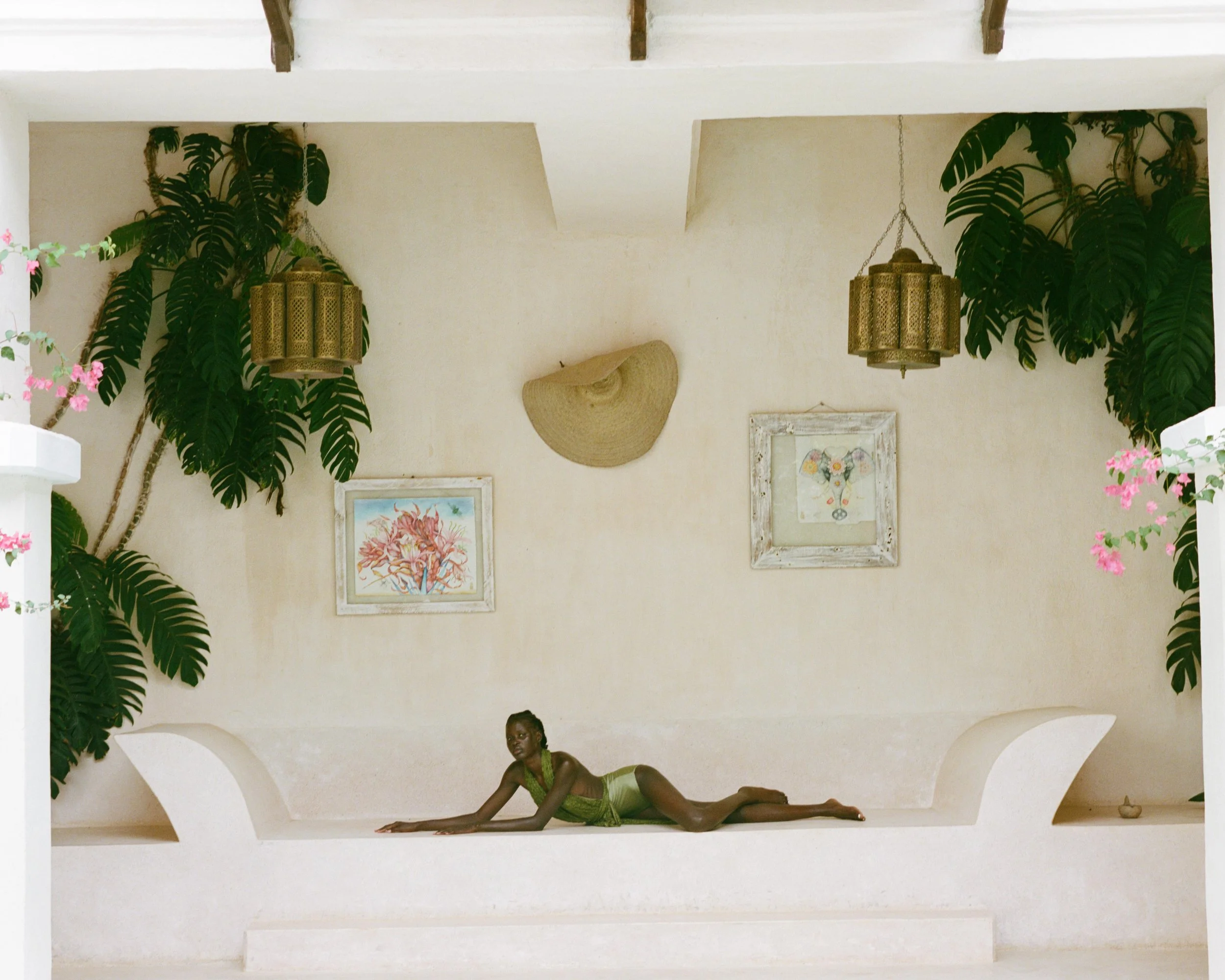
I’ve always felt photography was my greatest passion, but I never felt brave enough to take the leap. Before the internet and social media became what they are today, there wasn’t really a community for me in Jersey.. And community is so important. Now I’m part of multiple photography WhatsApp groups with people I’ve met, as well as others I hope to meet one day and whose work I really admire. We chat almost every day, and without them, and all the other photographers I’ve met and stayed in touch with, I don’t think I’d have had the confidence to keep pushing myself. A few years ago, I finally took that leap, and since then I’ve found myself surrounded by incredible opportunities and fellow photographers who are taking their own leaps too. It took me a long time to trust my instincts and follow my gut. A few things in my life came together around the same time. My dad became ill, and some of the last words he said to me were, “Go for it Skin (his nickname for me was skinny pig ha!).” So that’s exactly what I’m doing. Life is short, and since making that decision I’ve met the most amazing people and had experiences I never imagined possible.
How would you describe the visual language of your work? What makes an image feel like yours?
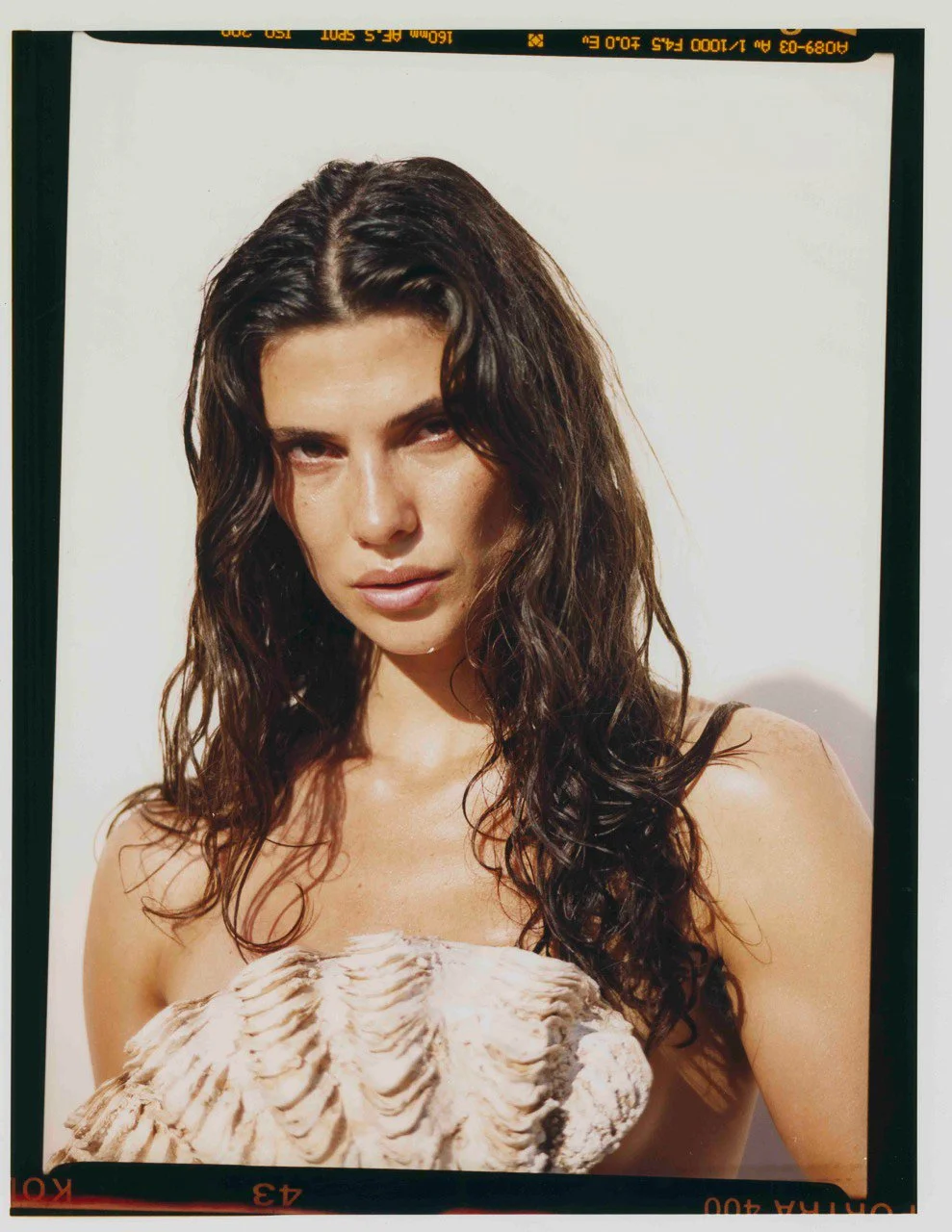
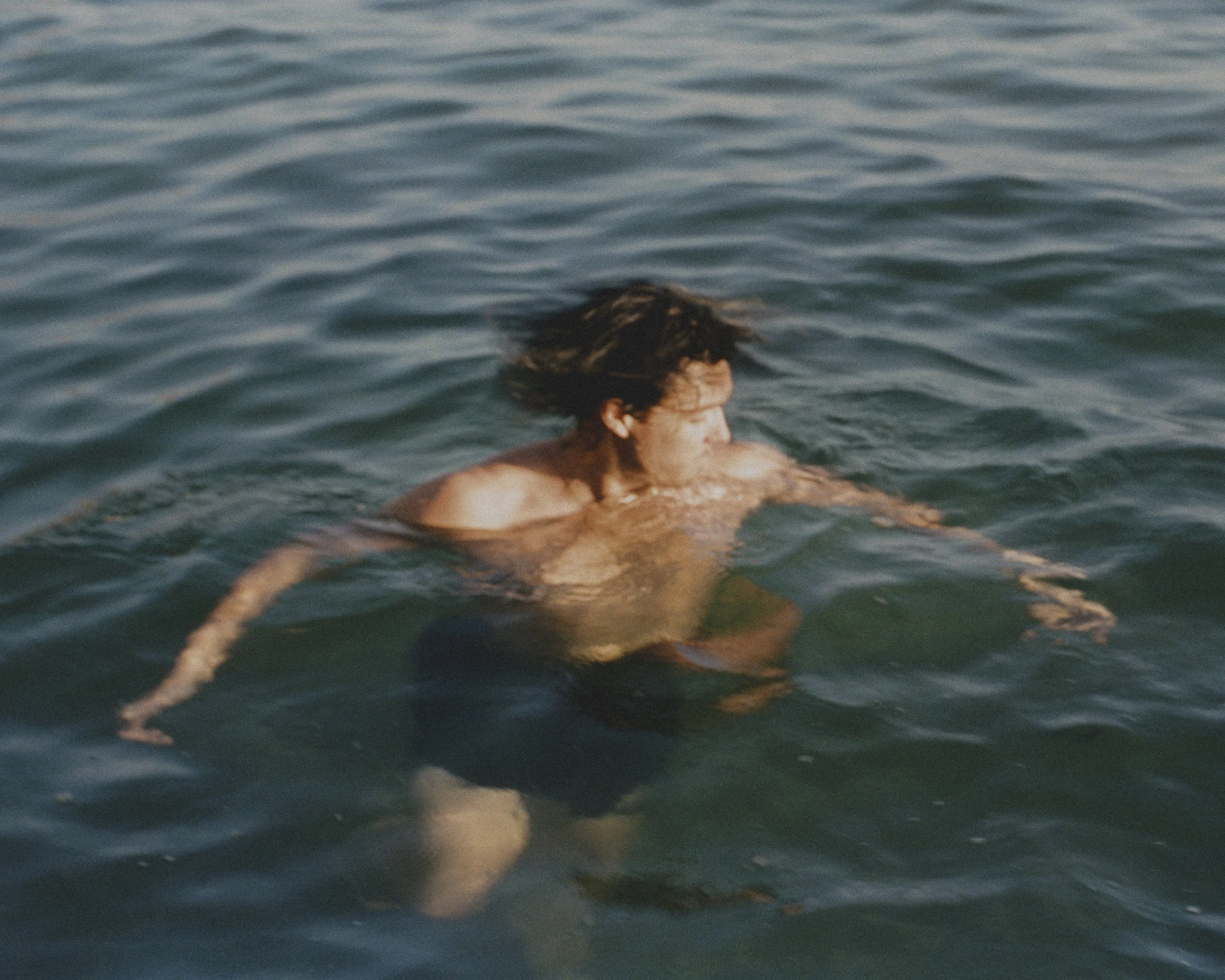
For me it always starts with natural light. I search for it, study it, and think about how it moves through a place at different times of day. If I could have it my way, I'd be somewhere for twelve hours just watching the light shift and shooting the same subject across all of it. That's the beauty of shooting friends while travelling, more ad hoc, you can sit, you can observe, and then you can capture. It's harder to work like that on client jobs but I try to bring the same sense of patience wherever I can.
Right now if I had to name it, my work sits in natural light, soft warm palettes, lifted shadows, and negative space. But I really hope my visual language doesn't stay the same. I can already see how much my work has evolved in just a year, partly because of what I want to capture, but also because of my relationship with my film lab. I've honestly spent a scary amount of money on scans, and each roll teaches me what I want and how to push the next one further. And then I have a bit of an addiction to thrifting cameras or picking them up in markets and testing them out. Sometimes your favourite image can come from the strangest camera you weren't sure about.
We all grow, and so should our eye and what we want to put into the world. In a few months my work might look slightly different, or completely different, who knows. I think that evolution is the point. My main desire is just to stay present enough to notice it as it happens.
In closing, what is your favourite film camera and film stock?
I’ve got three favourites, which makes it a difficult question to answer. I love shooting medium format on my Pentax, but I also love my Rolleicord. My 8mm camera is my pride and joy. I mostly shoot Portra 400 and 800, but I also enjoy loading a rogue roll of black-and-white or expired film when the moment feels right.